Loading...
Serving Queen Creek, AZ and surrounding areas. (480) 919-2298
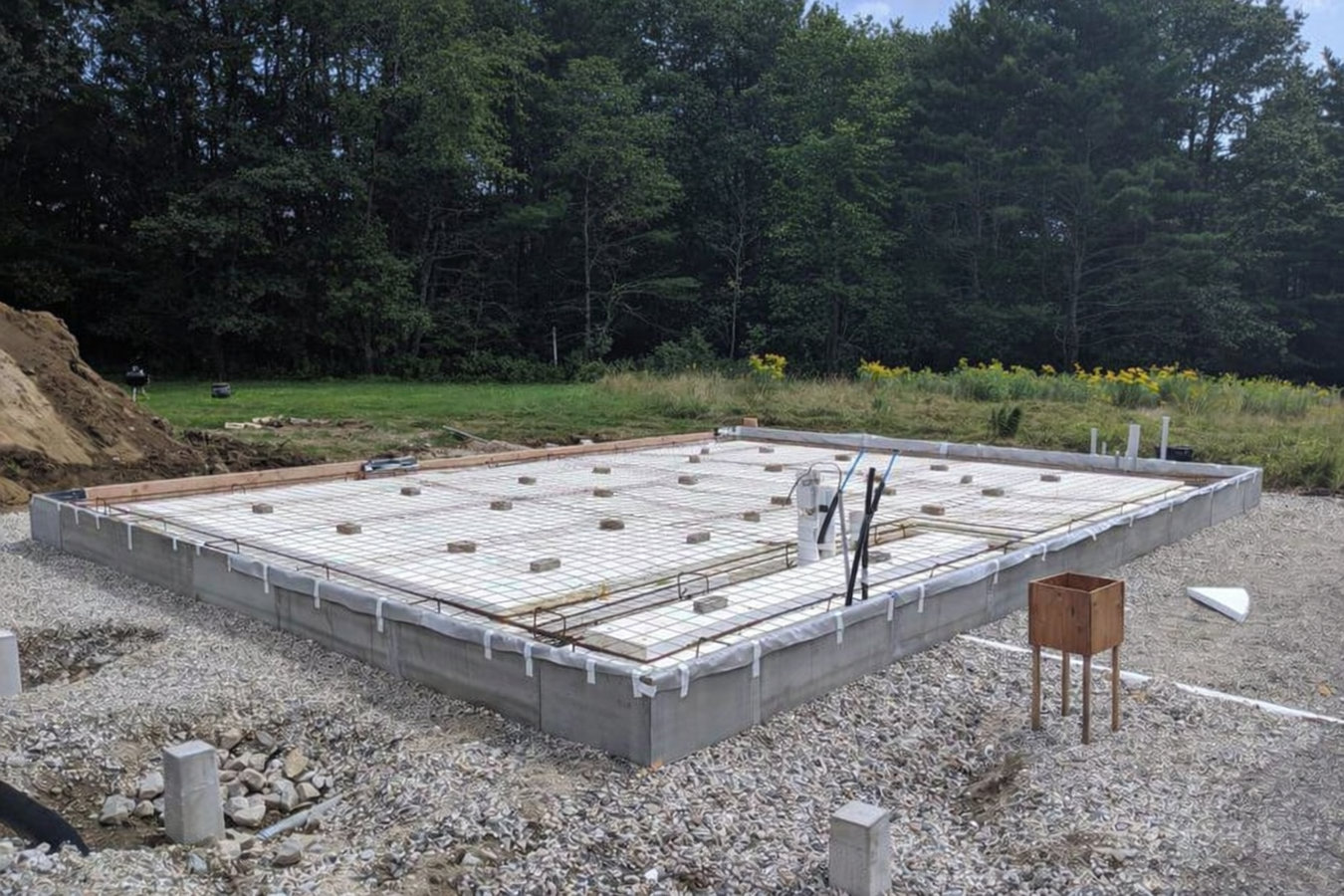
Building on desert soil without proper prep leads to cracks and settling down the road. We design and pour slab foundations that account for Queen Creek's expansive clay, caliche layers, and permit requirements from day one.
Slab foundation building in Queen Creek starts with site prep - grading, compacting, and laying gravel and a moisture barrier - then steel reinforcement is placed and the concrete is poured in a single day. Most projects run one to three weeks from permit approval to a cured, ready-to-build slab, depending on permit timelines and soil conditions.
Queen Creek homeowners dealing with expansive clay and caliche soil face a different challenge than builders in other parts of the country. The ground here moves with every rain cycle and dry stretch, which means the prep work under your slab matters as much as the concrete itself. Skipping or rushing the sub-base preparation is where most slab problems start - and where they are hardest to fix after the pour is already done.
If your project also requires deep structural support below grade, our concrete footings service can be coordinated alongside the slab build so both phases are planned together from the start.
If you are starting a new home, detached garage, casita, or workshop in Queen Creek, you need a slab foundation before framing can begin. Nearly all new residential construction here uses slab-on-grade, so this is the expected starting point. No walls or roof can go up until the slab is in place and passes the town inspection.
Small hairline cracks in a concrete floor are common and usually harmless. But cracks that are getting wider, where one side sits higher than the other, or that run in a pattern across a large section of floor may mean the slab is moving. In Queen Creek, where expansive soil and caliche layers shift with seasonal moisture changes, catching slab movement early is far less expensive than waiting.
When a slab shifts unevenly, the walls and door frames above it shift too. If doors that used to close easily now stick, drag, or fail to latch - or if you notice gaps forming around door frames - the foundation may be moving. In Queen Creek's heat cycles, small movements can accelerate quickly, so this symptom is worth investigating sooner rather than later.
Water stains, white chalky residue, or dampness on your concrete floor - especially after monsoon rains - may mean the moisture barrier under your slab has failed or was never properly installed. Queen Creek's monsoon season brings intense storms that can saturate the ground quickly, and a compromised barrier allows that moisture to wick upward into the home.
Every project starts with a site visit. We assess the soil conditions on your specific lot - not a neighboring one - before we design your slab. That means we determine the right footing depth, reinforcement spacing, and gravel sub-base thickness based on what is actually under your home. We pull the required Town of Queen Creek building permit and schedule every required inspection from pre-pour through final sign-off.
Underground rough-in coordination is part of our process - plumbing and electrical conduit that will come up through the slab must be placed before the pour, and we work with those trades to keep the sequencing on track. For properties that also need a separate foundation installation for an addition or accessory structure, we can plan both phases together to keep the permit process and scheduling efficient.
Homeowners and builders starting a new single-family home in Queen Creek - includes full site prep, reinforcement, moisture barrier, and permit handling.
Adding a detached garage or workshop - a separate permitted slab pour that accounts for vehicle loads and the specific soil conditions on that part of your lot.
Expanding an existing home footprint - requires its own permitted slab that ties into the existing structure without compromising the original foundation.
Standalone guest houses or rental units that need their own full slab foundation with underground utility rough-ins completed before the pour.
Queen Creek has been one of the fastest-growing towns in Arizona for several years running. That growth means thousands of new slabs are being poured on lots that range from compacted master-planned subdivisions to former farmland and open desert that has never been built on. Soil conditions vary significantly from neighborhood to neighborhood, and a contractor who does not evaluate your specific lot before designing your slab is making decisions without the information that matters most. Expansive clay and caliche are common across the area, and Queen Creek summers regularly exceed 110 degrees - both conditions require deliberate adjustments to how and when concrete is poured and protected during curing.
We regularly work in Mesa and throughout the East Valley, including Apache Junction, where similar desert soil conditions and permit requirements apply. Queen Creek's HOA-governed neighborhoods add another layer of planning - many associations require written approval before any ground is broken, even for fully permitted work. We ask about your HOA at the start of every project so that step never comes up as a surprise after the crew is already scheduled to arrive. When comparing contractors, reviewing the work of a concrete pad contractor in another market can give you a useful baseline for what the finished work and process should look like.
Call or submit a form and we respond within 1 business day to schedule a free site visit. We assess your lot's soil conditions, ask about HOA requirements, and write a quote that breaks out labor, materials, and permit fees separately - no bundled numbers that are hard to compare.
We submit the permit application to the Town of Queen Creek on your behalf. Approval typically takes one to two weeks - sometimes longer during busy building seasons in a fast-growing town. We track the status and keep you updated so your project start date stays on schedule.
Once the permit clears, the crew grades and compacts the soil, breaks through caliche if present, and lays the gravel sub-base and moisture barrier. Plumbing or electrical conduit that needs to come up through the slab is installed and inspected before forming begins.
Pour day starts early to beat the heat - the crew sets forms, places rebar, and finishes the slab in a single session. The concrete cures under protective covering before framing loads are allowed. A town inspector reviews the finished slab and you receive all passed inspection records to keep with your home files.
We respond within 1 business day - no obligation, no pressure. After you submit, someone from our office will call to schedule a free site visit so we can assess your lot and soil conditions before giving you a written price.
(480) 919-2298Our Arizona Registrar of Contractors license is active and verifiable online - this is the state credential that legally authorizes structural concrete work in Arizona. Insurance covers your property during the project. Both can be confirmed in minutes before you sign anything.
We pull every required Town of Queen Creek permit, schedule every required inspection, and hand you the passed inspection records when the job is done. Your slab will have a clean paper trail - something that matters when you refinance or sell, and something not every contractor delivers.
We evaluate the specific soil conditions on your lot before designing your slab. Caliche depth, clay content, and drainage patterns vary across Queen Creek's broad span. The slab we pour for your property is designed for your ground - not a spec borrowed from a different job across town.
Queen Creek summers push past 110 degrees, and concrete that cures too fast loses strength before it sets. We schedule pours for early morning during hot months and use wet curing or curing compounds to protect the slab during the critical first days - so the foundation you get in August is just as solid as one poured in November.
A slab foundation is the single most consequential pour on any project - everything above it depends on getting this right. The Arizona Registrar of Contractors makes it easy to verify any contractor is licensed before you commit - a check that takes two minutes and is worth every second on a structural job.
Complete foundation installation for new homes, garages, and additions in Queen Creek - from permit through cured, ready-to-frame slab.
Learn moreDeep footing pours that anchor structures in Queen Creek's caliche and expansive clay - frequently coordinated alongside new slab builds.
Learn moreCall now or submit a form - we respond within 1 business day and schedule a free on-site visit. Queen Creek's build season fills up fast, so locking in your schedule early keeps your project on track.