Loading...
Serving Queen Creek, AZ and surrounding areas. (480) 919-2298
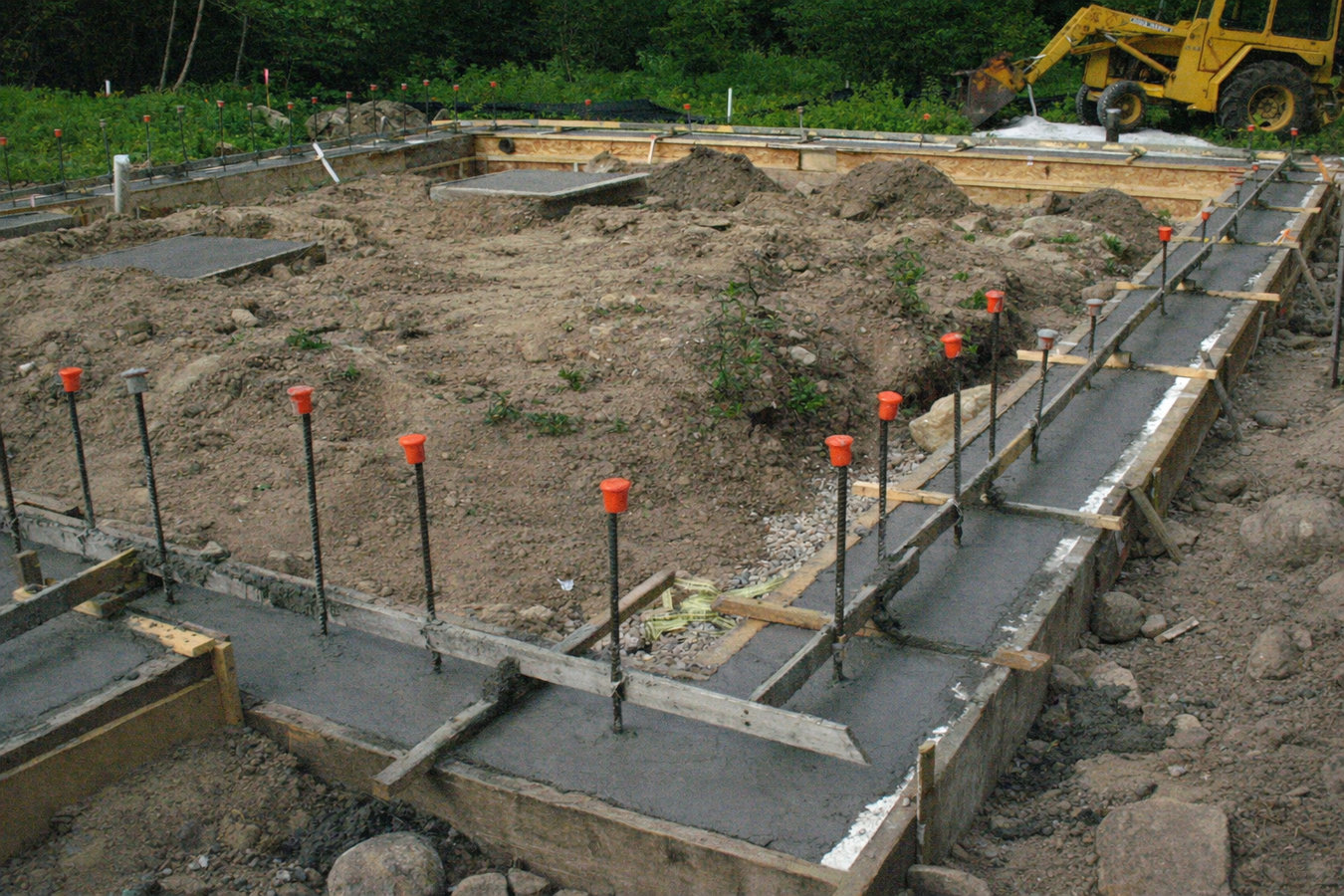
Caliche, clay soil, and Arizona heat all affect how footings must be designed and poured here. We assess your lot before we quote, pull the permit, and build footings that pass the town inspection the first time.
Concrete footings in Queen Creek start with a site visit to assess soil depth and caliche presence, followed by permit application, excavation, rebar placement, a pre-pour town inspection, and the concrete pour itself. Most residential footing projects run one to two weeks from permit approval through a cured, inspection-passed base ready for the next construction phase.
A footing is the hidden base beneath every structure you build - a covered patio, room addition, block wall, or casita. In Queen Creek, getting that base right matters more than in many other places. The desert soil here contains caliche that can stop a shovel cold a few feet down, and expansive clay that moves with every wet and dry cycle. A footing designed without accounting for those conditions is a footing that will shift over time.
If your project also needs a full concrete slab poured on top of or alongside the footings, our slab foundation building service can be coordinated with the footing work so both phases are planned together from the start.
Any permanent structure in Queen Creek needs a proper footing beneath it - that is true whether you are adding a covered patio, a room addition, a casita, or a masonry perimeter wall. If a contractor has not mentioned footings yet when discussing your project, ask directly. Structures built without proper footings can shift noticeably within just a few years in Queen Creek's desert soil.
Diagonal cracks at corners of a concrete slab, stair-step cracks along a block wall, or a structure that has started to lean are all signs the footing beneath it may have shifted or settled. In Queen Creek, these problems are especially common in neighborhoods built on previously farmed or graded land where soil compaction was uneven beneath the surface.
Queen Creek's monsoon season brings sudden heavy rain that can saturate the ground and cause movement in footings that were not dug deep enough or reinforced for the local soil. Stair-step cracks running along mortar joints of a block wall are a classic sign that the footing has shifted after a wet spell and needs to be assessed before the problem gets worse.
If an inspector flagged a patio cover, addition, or wall as unpermitted, there is a good chance the footing work was never inspected either. Getting a contractor to assess the existing footing - and retrofitting or replacing it if needed - may be necessary to clear the inspection report before a sale or refinance can proceed.
Every footing project starts with a site visit - not a phone quote. We assess your specific lot for caliche depth, soil compaction, and existing drainage before designing the footing dimensions and reinforcement schedule. We pull the Town of Queen Creek building permit, place and tie the rebar, and coordinate the required pre-pour inspection so the town confirms the work before any concrete goes in. For projects in HOA-governed neighborhoods - which covers most of Queen Creek - we walk you through what documentation your association typically needs before the permit is submitted.
When your project needs a full slab in addition to perimeter footings, our foundation raising service addresses structures where existing footings have already shifted and need correction before building on them. For new structures that need both footings and a full concrete base, our team plans both phases together so the permit, excavation, and concrete work are sequenced efficiently under one schedule.
Homeowners adding a covered outdoor structure - designed for the load and the soil conditions on your specific Queen Creek lot.
Expanding your home's footprint requires a permitted footing that ties into the existing structure without compromising the original foundation.
Perimeter or privacy walls need a continuous footing deep enough to stay stable through Queen Creek's wet and dry soil cycles.
Detached guest houses or rental units on the same lot - each needs its own permitted footing designed for the structure it supports.
Queen Creek sits on desert soil that varies more than most homeowners expect from one lot to the next. Caliche - the hard mineral layer that forms naturally in the Sonoran Desert - can sit a foot below the surface or several feet down depending on your neighborhood and lot history. Many Queen Creek lots were previously farmland, and areas of loose backfill from old irrigation channels or grading work are common. A footing poured into loose fill without reaching stable native soil can settle unevenly, which is why a site visit is not a formality here - it is the only way to quote a footing project accurately. Queen Creek summers regularly push past 110 degrees, and concrete poured without early-morning scheduling and protective measures during that heat can lose strength before it ever fully sets.
We work on footing projects throughout the East Valley, including in Gilbert and Chandler, where similar desert soil conditions apply. Queen Creek adds another layer with its HOA-dense neighborhoods - most associations require written approval before any exterior construction, and that approval process runs separately from the town permit. We ask about your HOA at the first site visit so neither step becomes a surprise after work is already scheduled. The Town of Queen Creek Development Services department handles all footing permits locally, and we work with them regularly on residential construction projects across the area.
We respond within 1 business day to schedule a free on-site visit. We assess your soil, caliche depth, lot drainage, and any HOA requirements before giving you a written estimate that breaks out excavation, reinforcement, the pour, and any site-specific factors separately - no bundled numbers.
We submit the permit application to the Town of Queen Creek Development Services and track its progress. If your neighborhood has an HOA, we walk you through what documentation the association typically requires so you can get written approval before the crew is scheduled.
Once permits clear, the crew digs to the specified depth - using mechanical equipment if caliche is present - then places and ties the steel reinforcement. The trench and rebar are left ready for the town inspector to review before any concrete is poured.
After the town inspection is approved, we pour the footing in a single continuous pass. In summer months, pours are scheduled for early morning and the fresh concrete is protected from Queen Creek's heat during curing. Most footings are ready for the next phase of construction within three to seven days.
We respond within 1 business day - no obligation, no sales call. We visit your lot in person before quoting so the number we give you reflects your actual site conditions. Queen Creek projects book out fast in fall and spring, so the sooner you reach out, the more scheduling flexibility you have.
(480) 919-2298Our Arizona Registrar of Contractors license is current and covers concrete and foundation work. You can verify it yourself at roc.az.gov before signing anything. A licensed contractor is required to carry the bond and insurance that protects you if anything goes wrong on your property.
The Town of Queen Creek inspects footings before concrete is poured, and a failed inspection means delays, rework, and added cost. We have worked with Queen Creek's Development Services department long enough to know exactly what their inspectors look for - dimensions, rebar placement, and depth verification. Our track record is a first-time pass on every permitted footing project.
We have poured footings in more than 12 communities across the East Valley, including neighborhoods throughout Queen Creek where caliche depth varies significantly block by block. That firsthand experience means we bring the right equipment on day one rather than discovering the soil conditions after the job starts.
We schedule every summer footing pour for early morning and protect fresh concrete from Queen Creek's heat with curing compounds or wet covers. This is not optional practice for us - it is the baseline. Concrete that cures too fast in 110-degree heat loses surface strength and can fail at the inspection or under load.
Every footing we pour is permitted, inspected, and built to the soil conditions on your specific Queen Creek lot - not to a generic plan. That combination of local site knowledge and proper permitting means the structure you build on top of it will stay where you put it.
Correcting footings and foundations that have already shifted - addresses the underlying cause before any new structure is built.
Learn moreFull concrete slab pours that pair with perimeter footing work for new homes, garages, and accessory structures in Queen Creek.
Learn moreCall now or submit a form - we respond within 1 business day and come to your property before quoting. Fall and spring build seasons in Queen Creek fill up fast, so the earlier you reach out, the more flexibility you have on start dates.