Loading...
Serving Queen Creek, AZ and surrounding areas. (480) 919-2298
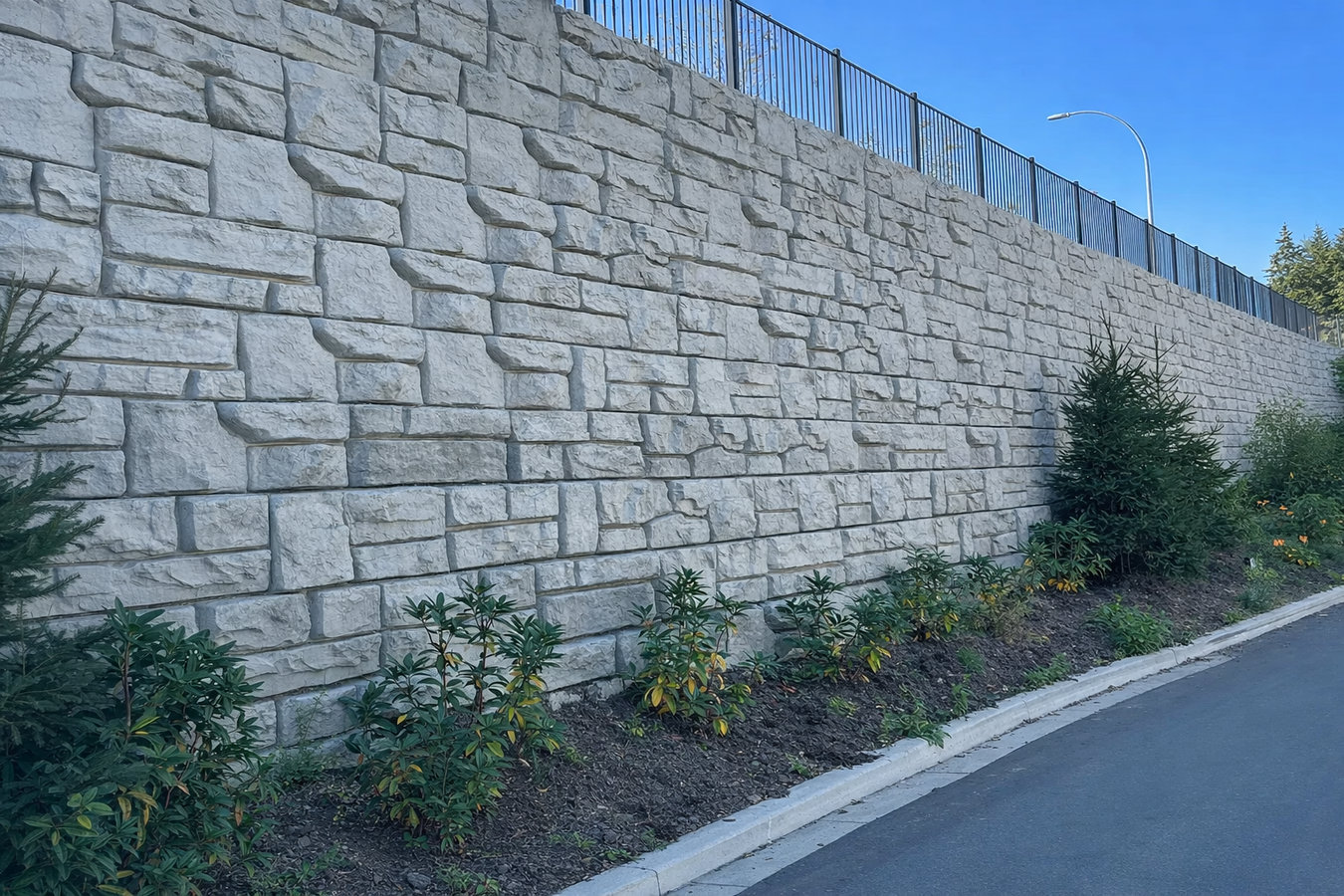
Soil washing toward your foundation every monsoon season? A properly built concrete retaining wall holds the ground in place, protects your property, and turns a problem slope into usable outdoor space.
Concrete retaining walls in Queen Creek hold back soil on slopes, prevent erosion during monsoon rains, and redirect water away from foundations - most residential projects take between two days and two weeks depending on wall length, height, and how much excavation the site requires.
Queen Creek homeowners deal with two challenges that make retaining wall work more demanding here than in other parts of the country: expansive clay and caliche soil that moves with every rain cycle, and summer storms that can drop intense rainfall in a short window. A wall built without proper footing depth and drainage design will start to lean or crack within a few years - regardless of how the concrete looks on day one.
If your project involves finishing an outdoor living area, our concrete floor installation service pairs well with retaining wall work and can often be combined in the same build window.
If you see soil sliding down a slope and piling up near your foundation, patio, or driveway after monsoon storms, the ground is not being held in place. Queen Creek's summer storms can deliver intense rain in a short time, and that runoff accelerates erosion quickly. Left alone, migrating soil can undermine your foundation and flood your yard every season.
If part of your yard is too steep to mow safely, too unstable to plant, or just sitting unused because of the grade, a retaining wall can level that space and make it functional. Many Queen Creek homes on corner lots or backing up to washes have exactly this kind of terrain. A wall does not just protect - it can genuinely add usable outdoor space.
Horizontal cracks, sections starting to bow outward, or gaps opening between blocks are warning signs a wall is under more stress than it can handle. Catching this early is far less expensive than rebuilding after a full collapse. The desert soil here puts consistent pressure on walls through wet-dry cycles, so early repairs matter.
Queen Creek's caliche layer can prevent water from draining naturally. If standing water collects near your foundation or along a slope after rain, water pressure is building up in the soil. A retaining wall with proper drainage can redirect that water before it causes structural damage or creates ongoing erosion problems.
Every retaining wall project starts with a site assessment: measuring the slope, reviewing drainage patterns, and evaluating the soil conditions before any design decisions are made. For most residential walls in Queen Creek, we work in poured concrete or concrete masonry units - both are reinforced with steel rebar to handle the constant soil pressure. We handle the permit application with the Town of Queen Creek and coordinate the required final inspection so the finished wall is on the books.
Drainage installation behind the wall is included in every project - not an add-on. Gravel backfill and perforated drain pipe give water a path to escape so it does not build up and push the wall outward. For properties that also need structural work below grade, our concrete footings service provides the deep foundation support that some slopes and soil conditions require.
Properties needing a solid, seamless wall with maximum strength - best for taller walls or sites with significant water pressure.
Homeowners who want a more flexible build process or a wall with a traditional stacked block appearance.
Sites where the wall must also serve as part of a grading or drainage solution, requiring deeper footings and heavy rebar.
Steep slopes that need the grade broken into two or more levels rather than one tall wall - reduces soil pressure and improves drainage.
Queen Creek sits on caliche-heavy and expansive clay soil that swells when wet and shrinks in dry heat - a cycle that happens repeatedly through monsoon season and irrigation. This constant movement puts extra stress on retaining walls that contractors in less demanding climates may not design for. Footing depth, reinforcement spacing, and drainage are not generic decisions here - they need to reflect what the ground actually does over a year of desert weather. A wall built to standard specs from a cooler, wetter climate may look fine at first and begin to lean within three to five years.
We work regularly in Surprise and throughout the East Valley, including Gilbert, where similar soil conditions and HOA approval requirements apply. Many Queen Creek neighborhoods grew quickly in the 2000s and 2010s on land that was graded fast, which means some yards have uneven slopes, fill soil that has not fully settled, or drainage patterns that were not designed with retaining walls in mind. A thorough site assessment before any work begins is the most important step on any project here.
Call or submit a form and we respond within 1 business day to schedule a free visit. We measure the slope, assess drainage patterns and soil conditions, and ask about your goals before writing your quote - photos can help but cannot replace a site visit for this type of work.
Once you approve the estimate, we submit the permit application to the Town of Queen Creek on your behalf. Permit approval typically takes one to two weeks. If your HOA requires pre-approval, we flag that requirement upfront so there are no delays once the permit clears.
The crew excavates to the correct footing depth - often through caliche, which takes more time and equipment than standard soil. The footing is poured first and allowed to set. The wall goes up with steel reinforcement running through it, and drainage material is installed behind the wall before any backfill.
After construction, we schedule the final inspection with the town and clean up the site. The concrete needs about a week before it is safe to work around and roughly 28 days to reach full strength - avoid placing heavy loads against the wall during that window.
We respond within 1 business day - no obligation, no pressure. After you submit, someone from our office will call to schedule a free on-site visit so we can assess your slope and soil conditions and give you an accurate written quote.
(480) 919-2298Our license is active and verifiable through the Arizona Registrar of Contractors website - you can check it in two minutes. Insurance covers your property if anything goes wrong during the job, and licensing confirms we meet the state's standards for this type of structural work.
Drainage behind the wall is not an optional add-on - it is built into every project we do. Gravel backfill and perforated drain pipe are installed before any soil goes back in. In Queen Creek, where monsoon rains are intense and the soil does not always drain freely, this step is what keeps walls standing for decades.
We work across 12 cities in the Phoenix metro, including neighborhoods throughout Queen Creek where caliche excavation and expansive clay are standard conditions. Every footing depth and reinforcement decision we make is based on what the soil here actually does - not a generic spec from a different climate.
We pull the required Town of Queen Creek permit and flag any HOA pre-approval requirements before work starts - not after. You will know about every approval step and its timeline before you commit to a project date, so nothing delays the crew once they arrive.
A retaining wall is a structural project - the kind where cutting corners on drainage or footing depth shows up within a few years, not decades. For guidance on what qualifies a contractor for this type of work, the American Concrete Institute publishes the standards that govern proper concrete reinforcement and structural placement - a useful reference when evaluating any contractor you are considering.
Pour a new concrete slab for a garage, patio, or conversion space - combined with retaining wall work in the same project window when site conditions allow.
Learn moreDeep footing pours for structures that need solid anchoring in Queen Creek's caliche and clay soil - often required before or alongside retaining wall builds.
Learn moreCall now or submit a form - we respond within 1 business day and schedule a free on-site assessment. Monsoon season arrives fast, and walls built in spring are ready before the first heavy storms.