Loading...
Serving Queen Creek, AZ and surrounding areas. (480) 919-2298
Cracked, uneven, or missing walkways are a daily hazard. We build concrete sidewalks in Queen Creek that stay flat, drain correctly, and hold up through monsoon season and desert summers.
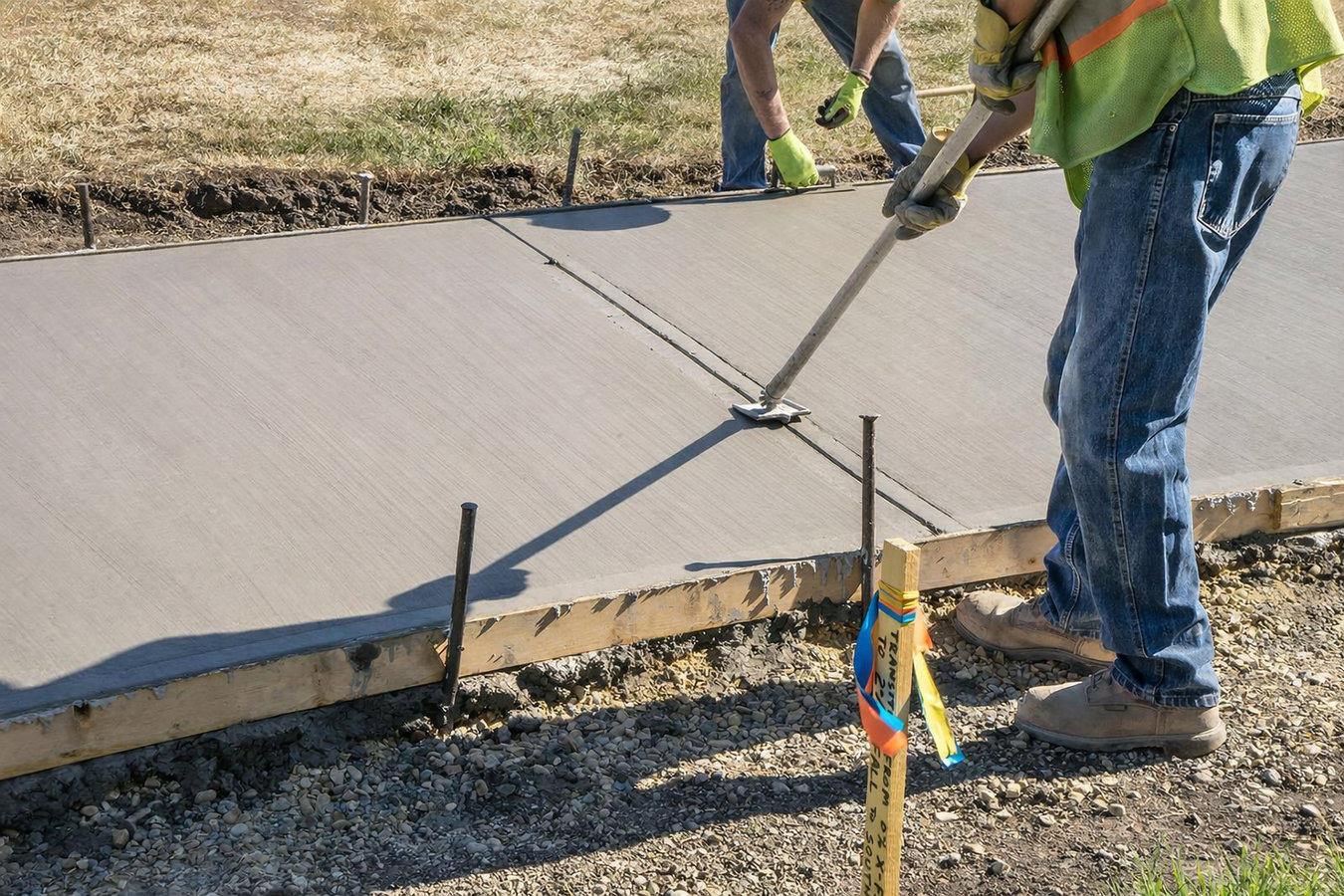
Concrete sidewalk building in Queen Creek means digging out the ground to the right depth, laying a compacted gravel base, and pouring a slab that hardens into a permanent surface - most residential jobs take one to two days to complete, with foot traffic possible within 48 hours and full strength reached over 28 days. Done right, a concrete walkway in this climate lasts 30 to 50 years with minimal maintenance.
Homeowners in Queen Creek deal with a specific challenge that many other parts of the country do not - clay-heavy desert soil that swells during monsoon season and shrinks back as it dries out. That movement is the main reason sidewalks crack and shift faster than they should. The solution is base preparation, not just better concrete. If you are also thinking about concrete driveway building, the same base principles apply, and combining projects in one mobilization often saves money on both.
Most homeowners request a broom finish - a stiff brush dragged across the surface while it is still soft - because it adds the kind of grip that matters when a monsoon storm makes every surface slick in seconds. Plain smooth finishes look clean but become genuinely dangerous in summer rain. The American Concrete Institute provides guidance on concrete finishing standards that local contractors should follow on every pour.
Hairline cracks are normal aging. Cracks wider than that - especially ones where the edges sit at different heights - mean the slab has moved past surface wear into structural failure. In Queen Creek, clay-heavy soil shifting through repeated wet-dry cycles is usually the cause. A crack you can catch your toe on will not heal itself and will get worse each monsoon season.
Walk your sidewalk slowly and notice if any panels feel uneven or look tilted relative to the ones around them. This movement is common in Queen Creek neighborhoods where the soil expands during monsoon season and contracts as it dries. Uneven sections are a fall risk for children and older adults, and the problem compounds with each seasonal cycle.
If the top layer is peeling away or leaving a rough gravelly texture, the surface has deteriorated past the point where sealing will help. Queen Creek's intense sun breaks down concrete surfaces faster than in cooler climates. A deteriorated surface also holds dirt and stains more easily, making the walkway look older than the rest of your property.
If water pools on or along the edge of your sidewalk after a storm, the surface was either graded incorrectly when built or has shifted enough to trap water. Standing water next to a slab accelerates the soil movement that causes cracking and sinking - and it creates a slipping hazard right when the surface is most likely to be used.
We build new concrete walkways from the ground up, replace deteriorated or shifted slabs, and add sidewalks to properties that were never properly connected at the original build. Every project includes excavation, removal of unstable native clay soil, a properly compacted gravel base, the pour, and your choice of finish. For homeowners who want a decorative path that complements their landscaping, garage floor concrete and interior slabs follow the same preparation principles and can be scheduled as part of the same project.
We handle the permit application with the Town of Queen Creek Development Services on your behalf - you do not need to figure out which forms to file or which office to call. Permit timelines in Queen Creek can run longer than in slower-growing communities, so we build that lead time into every project estimate. Control joints are placed at correct intervals on every pour to give the concrete a place to flex with Queen Creek's temperature swings without cracking randomly.
Suits homeowners adding a path from the street, driveway, or gate to a front entry or backyard structure for the first time.
Best for properties where existing concrete has cracked, shifted, or sunk past the point of surface repair.
For walkways that cross a driveway or tie into a curb cut where thicker concrete and proper base depth are required.
The practical standard for Queen Creek - textured surface that provides grip during monsoon season when surfaces get slick fast.
Works for homeowners who want a stamped or colored surface on a front entry or connecting path that matches upgraded outdoor spaces.
Suited to larger properties or new additions where a walkway needs to connect a main house, garage, guest suite, or pool area.
Queen Creek sits on some of the most movement-prone soil in the Phoenix metro area. The clay and caliche content in the native ground swells during monsoon season and shrinks back as it dries - that cycle of expansion and contraction is the single biggest reason sidewalks in this area crack and lift faster than homeowners expect. Contractors who remove that native soil and replace it with a stable compacted base before pouring produce work that holds up. Contractors who skip that step produce sidewalks that start moving within a year or two. The difference is not visible once the concrete is poured, but it determines how your walkway looks at year five.
Queen Creek is also one of the fastest-growing towns in Arizona, and the town permit office processes a high volume of applications as a result. Building the permit timeline into your project from the start is especially important here - approvals that take a week in slower markets can take longer during peak construction seasons. Homeowners in Gilbert and Mesa face similar permit volume in their own rapidly growing communities, and we manage that process routinely across the East Valley.
We respond within 1 business day of your first call or form submission. We come out to measure the area, check soil and drainage conditions, and give you a written quote that breaks out labor, materials, and permit fees separately - so you can compare quotes from multiple contractors on equal terms.
We file the permit application with the Town of Queen Creek on your behalf. We build the approval timeline into your project schedule from the start, so you are not waiting on paperwork after the crew is ready to dig. You will know the expected start date before any deposit changes hands.
The crew marks out the area, removes existing concrete or landscaping in the path, and excavates the ground to the correct depth. In Queen Creek, this almost always includes removing native clay soil and replacing it with a compacted gravel base - the step that most determines how long your sidewalk stays flat and intact.
In summer, the pour happens in the early morning hours to avoid peak heat. The surface is finished with a broom texture or your chosen finish, and control joints are cut at proper intervals. Once cured and inspected, we walk you through the finished work and answer any questions about the resealing schedule and maintenance.
We respond within 1 business day - no obligation, no pressure. After you submit, someone from our office calls to schedule a free on-site visit at a time that works for you.
(480) 919-2298We remove the native soil and replace it with a compacted gravel base on every sidewalk job. That one step is what separates sidewalks that stay flat for 30 years from ones that start shifting after the first monsoon season. It costs a little more upfront and it is not optional on any project we take on.
Every concrete sidewalk job we do in Queen Creek includes a permit. Skipping it is not worth the risk - unpermitted work can create problems when you sell and may need to be torn out at your expense. We handle the paperwork and coordinate the inspection so you never have to figure out which office to call.
You can verify our contractor license at the Arizona Registrar of Contractors website in seconds - look us up before signing anything. A licensed contractor is legally required to carry insurance that protects you if something goes wrong on your property. That coverage is part of what you are paying for.
We work across 12 communities in the Phoenix metro area, so we know what the permit offices, HOA review processes, and soil conditions look like throughout the region. Local experience matters here - a contractor based in Scottsdale who treats Queen Creek as a secondary market may not know the specific preparation steps this soil requires.
Local soil knowledge and permit familiarity are not add-ons - they are part of how we do every sidewalk job in Queen Creek. You can read more about concrete best practices for hot-weather climates from the Portland Cement Association and verify our license status at the Arizona Registrar of Contractors.
Upgrade your garage slab with the same preparation standards we apply to every outdoor pour.
Learn moreConnect your new walkway to a full driveway replacement handled in a single project mobilization.
Learn moreFall is the best time to pour in Queen Creek - contractor schedules fill up fast, so locking in your date now means you won't be waiting until next year.